
- Response template: where each student’s answer starts.
- Model answer: the full answer you’d give full points.
Response Template
A template is content you put in each student’s answer before they start, for students to edit, fill in, and build on. Use it when the shape of the answer matters, such as:- Headings to answer under, like Sketch, Work, and Answer
- A diagram to label, or a graph to finish
- A table to complete
- Starter code to complete
What Students See
When a student opens the question for the first time, their answer already holds your template. They can change or delete any part of it. To start over, they select Reset Response, which brings your template back.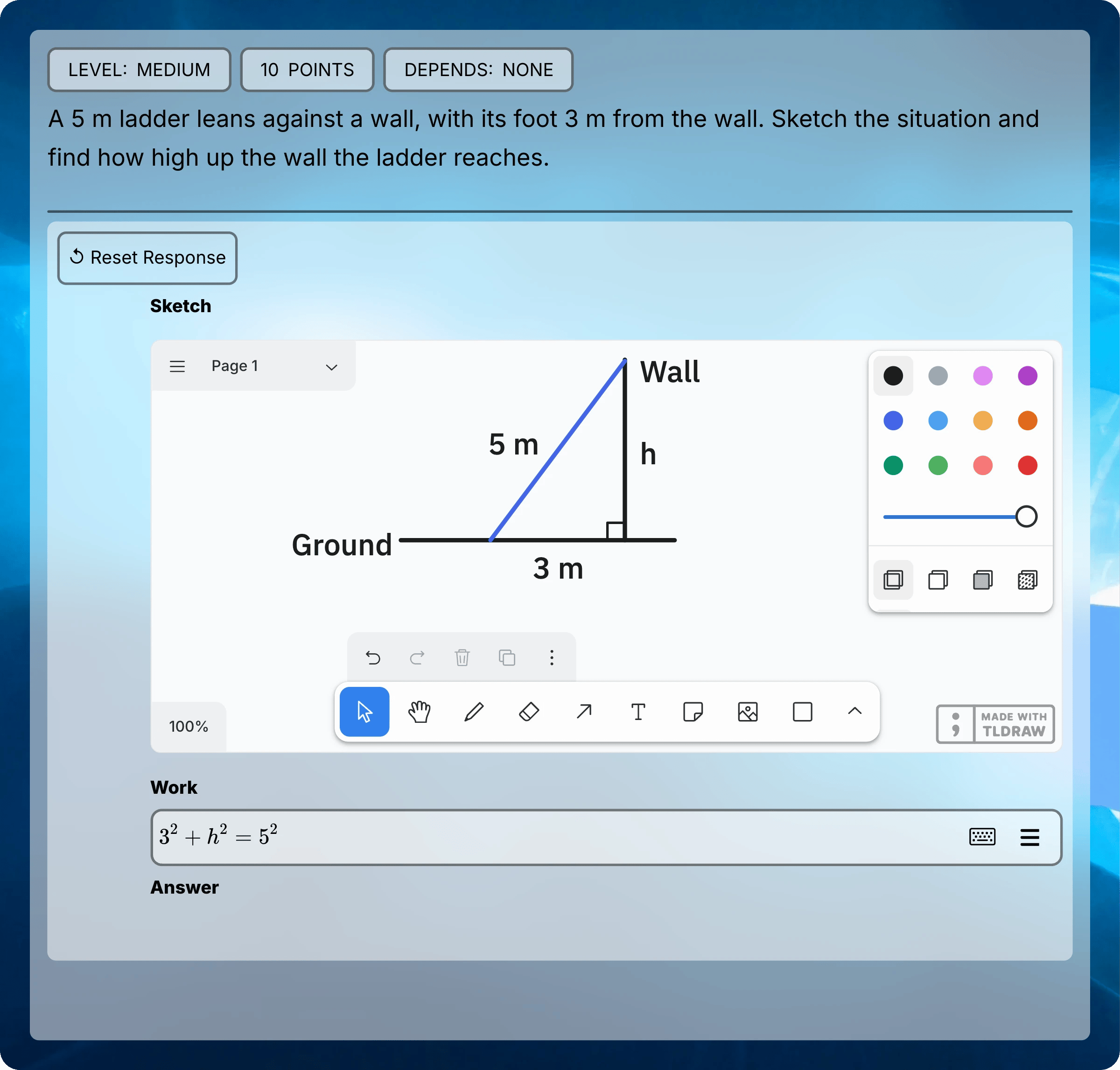
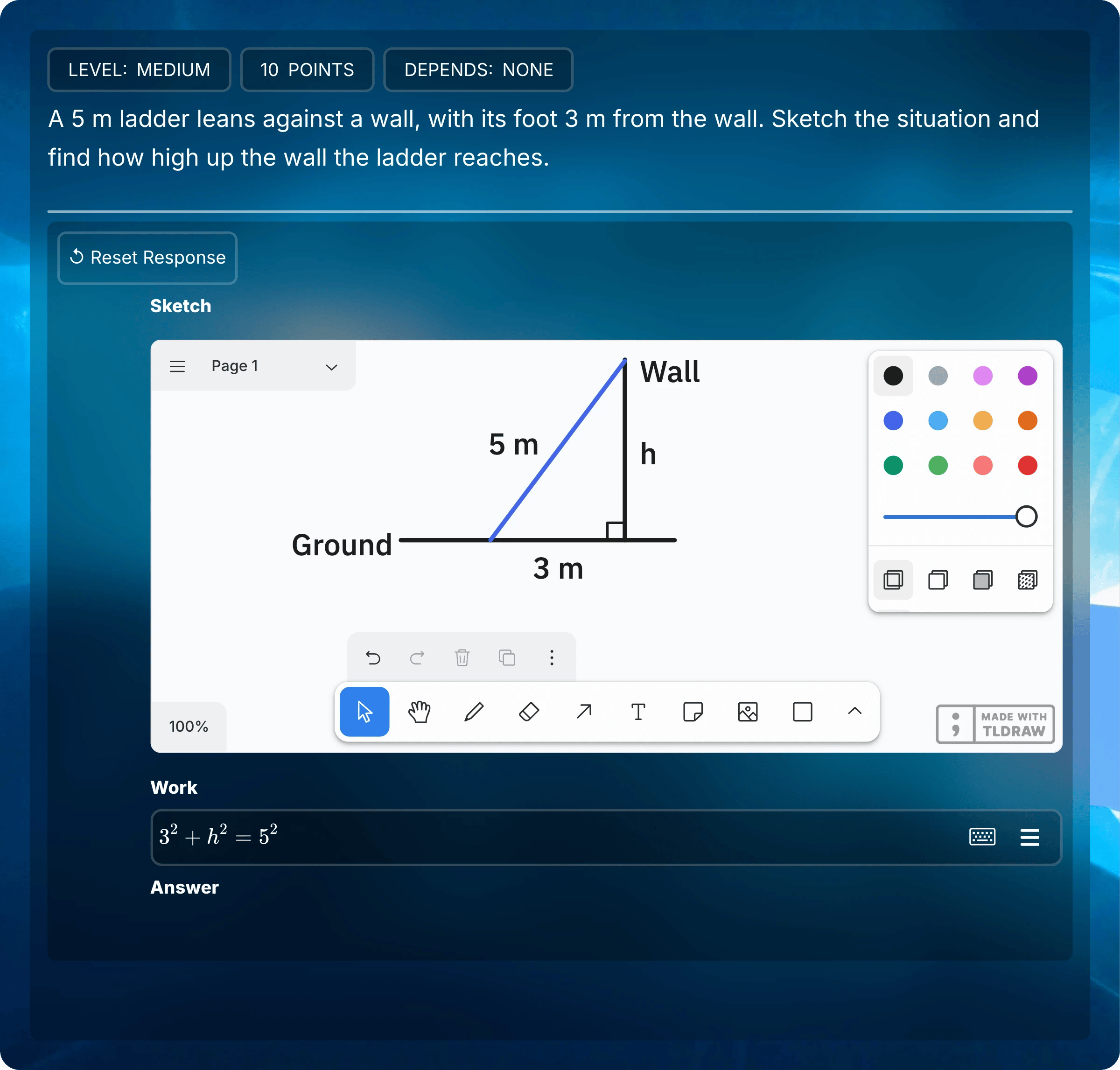
Students fill in each heading instead of starting from a blank editor.
Changing a template later doesn’t change answers students have already saved.
Model Answer
Under Model answer in the question form, write a complete answer you’d give full points. Include the reasoning or working, not only the final result, since the grader compares students’ answers against it. The model answer is a reference, not the only path. The grader gives credit for a different approach when it meets the rubric. The Socratic Tutor also reads it to guide students without giving it away.Next: Write a Rubric
Write the criteria the grader scores against.